
As cannabidiol (CBD) continues to gain significant attention worldwide, 2025 marks another pivotal year in its legal evolution. Consumers and businesses alike grapple with the rapidly shifting landscape as countries revise their stances on cannabis derivatives. While hemp-derived CBD with minimal THC content enjoys federal legality in some nations, varying regulations around the globe and even within countries render the picture complicated. The interplay of laws, health regulations, and market dynamics creates a volatile environment for those interested in CBD’s health benefits and commercial potential. Understanding these nuances becomes crucial, especially as leading brands like Charlotte’s Web, CBDistillery, and Green Roads expand their reach amid tightening compliance demands. This article explores the current global legal status of CBD, highlighting key jurisdictions, regulation challenges, and the impact of new reforms set to shape 2025’s CBD market.
Understanding Federal and State CBD Laws in the United States: What 2025 Brings
In the United States, the legal status of CBD remains a complex weave influenced by both federal mandates and state-specific regulations. The foundational piece of federal legislation, the 2018 Farm Bill, legalized hemp-derived CBD containing less than 0.3% THC, removing it from the Controlled Substances Act’s Schedule I classification. This pivotal change has allowed numerous brands, such as Medterra and Joy Organics, to develop and offer a wide array of hemp-based products accessible across most states.
However, this federal legalization is tempered by the Food and Drug Administration’s (FDA) cautious stance. The FDA currently permits only the prescription drug Epidiolex, a CBD-based medication approved for seizure disorders, and prohibits the addition of CBD to food and dietary supplements. This has created a gray area for commercial products like tinctures, edibles, and topical solutions, intensifying regulatory scrutiny. Many manufacturers find themselves navigating the challenge of product marketing without making therapeutic claims that would attract FDA penalties.
State laws add another layer of complexity. While the majority of states embrace hemp-derived CBD, various conditions exist including age restrictions, THC content requirements, and distinctions between hemp- and marijuana-derived CBD products. States such as Idaho maintain strict rules demanding zero THC, despite federal leniency, making compliance a maze for retailers and consumers.
State Variations and Compliance Challenges
To illustrate, consider the following overview of how select states regulate CBD within their borders:
| State | Hemp-Derived CBD Status | Marijuana-Derived CBD Status | Age Limit |
|---|---|---|---|
| California | Legal | Legal recreational and medical | 21+ |
| Idaho | Legal if 0% THC | Illegal | None |
| Florida | Legal | Medical use only | 21+ |
| New York | Legal | Legal recreational and medical | 21+ |
| Kansas | Legal if 0% THC | Medical use only | None |
This patchwork demands constant vigilance from anyone distributing or consuming CBD products. Brands like Endoca and PureKana have invested heavily in third-party testing and transparency to maintain compliance and consumer trust across these varying state environments.
Marketing and distribution strategies must therefore account for these discrepancies. For instance, CBD companies must exercise care not to market CBD as a dietary supplement, adhering to FDA rules, while also respecting state age and THC content regulations. This underscores why potential customers and retailers should consult trusted guides like understanding the legal status of CBD in different regions for the latest updates and clarify local statutes before making purchases or sales.

Global Legal Landscape of CBD: Diverse Regulations Around the World
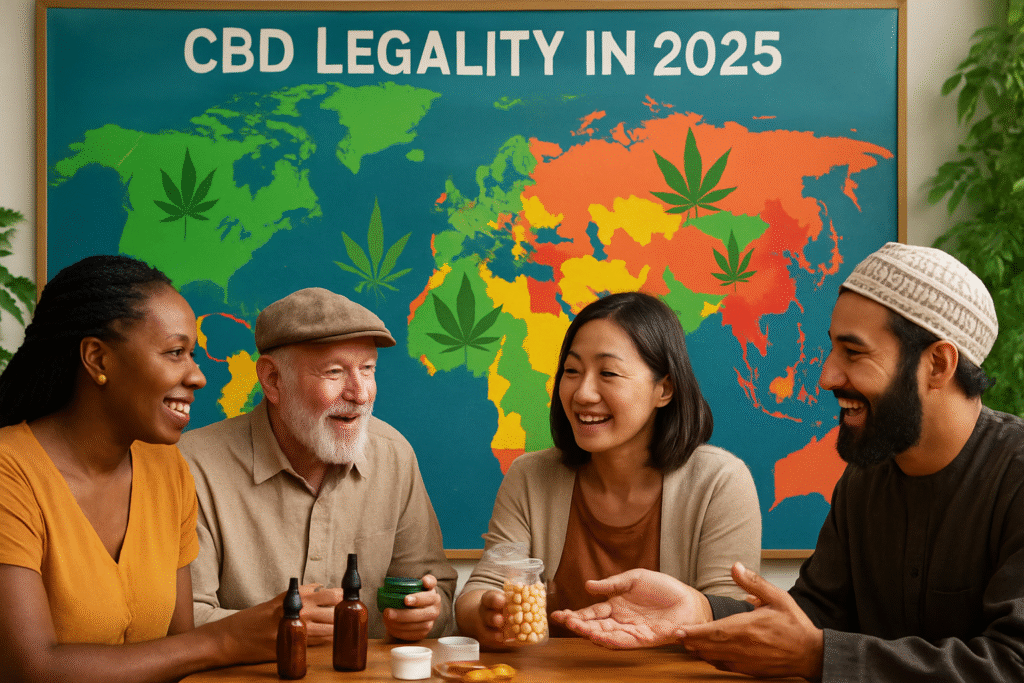
Moving beyond the U.S., the global regulatory environment for CBD is equally multifaceted. Various countries have embraced CBD with differing THC limits, legal frameworks, and intended uses. Some markets offer vibrant regulation supporting both medicinal and recreational uses, while others maintain strict prohibitions.
Canada exemplifies a regulated market where CBD is legal and controlled under the Cannabis Act, allowing both medical and recreational sales with a THC threshold aligned at 0.3%. Likewise, Mexico has liberalized CBD policies, setting limits up to 1%, supporting a growing consumer base.
Germany’s dramatic cannabis reform implemented in 2025 further demonstrates the shifting tide in Europe. The country officially legalized recreational cannabis and substantially eased restrictions on CBD. Previously classified as a controlled substance, CBD was declassified, and regulations introduced social cannabis clubs providing limited cultivation and consumption rights to registered members. This sweeping reform has stimulated a market valued at approximately 4.5 billion euros, attracting significant foreign investments and boosting domestic producers. Brands like Canopy Growth are well-positioned to capitalize on these changes as they expand European operations.
Countries with Restrictive or Prohibitive Regulations
Conversely, nations such as Russia, Singapore, and several Balkan states enforce strict bans on CBD and cannabis products. Singapore’s zero-tolerance policy, coupled with severe penalties, illustrates how legal risks remain exceptionally high in some jurisdictions. Travelers navigating these contrasting laws need detailed knowledge to avoid legal repercussions, suggesting the value of resources such as CBD travel laws tips 2025.
| Country | Legal Status of CBD | THC Limit | Remarks |
|---|---|---|---|
| Canada | Legal (Regulated) | 0.3% | Under Cannabis Act; medical and recreational |
| Mexico | Legal | 1% | Permitted for consumer use |
| Germany (2025 Reform) | Legal | 0.3% | Recreational cannabis legalized; CBD declassified |
| Russia | Illegal | – | Strict prohibition |
| Singapore | Illegal | – | Severe penalties for possession |
International discrepancies have significant implications for exporters, importers, and consumers, demanding both legal awareness and robust compliance strategies. Moreover, they underscore why brands prioritize clear communication about product testing and legal adherence, supporting consumer confidence across borders.
FDA Oversight and the Ongoing Challenges in CBD Regulation
The FDA’s regulatory framework profoundly impacts the CBD industry, particularly regarding product marketing, consumer safety, and compliance standards. Despite federal legalization for hemp-derived CBD, the agency’s prohibition against adding CBD to food and dietary supplements imposes significant limitations. This stems partly from the approval of Epidiolex, the only FDA-sanctioned CBD-based drug, triggering a drug exclusion rule prohibiting identical ingredients from being marketed elsewhere in food or supplements.
Manufacturers frequently receive warning letters for promoting unapproved health claims or mislabeling products. Over the past few years, the FDA has issued around 100 warning letters, targeting companies failing to meet regulatory requirements. This enforcement method has allowed a proliferation of unregulated and often misrepresented products to persist on the market, placing consumers at legal and health risk.
To counter these challenges, consumer education and transparency have become pivotal. Leading brands like Hemp Bombs and Elixinol emphasize independently verified Certificates of Analysis (COAs) that confirm cannabinoid profiles and absence of contaminants. This practice, alongside clear labeling and responsible marketing, forms the cornerstone of trust-building within an otherwise fragmented regulatory space.
- FDA permits only Epidiolex as a CBD drug
- Prohibits CBD addition in food and dietary supplements
- Issues warning letters for mislabeling and false claims
- Limited resources result in uneven enforcement
- Encourages use of third-party lab testing and COAs
Given the FDA’s ongoing role, businesses and consumers are encouraged to continually consult resources like understanding the legal complexities surrounding CBD to navigate emerging rules and avoid compliance pitfalls effectively.
Ensuring Consumer Safety and Product Quality Amidst Legal Complexity
With diverse legal frameworks and variable enforcement, consumer safety and product quality remain vital challenges. Market entry by trustworthy manufacturers such as Charlotte’s Web or PureKana underscores a broader industry movement towards standardization, ethical production, and scientific validation.
Reliable product sourcing involves:
- Third-party lab testing confirming cannabinoid concentration and purity
- Clear identification of hemp-derived versus marijuana-derived CBD
- Transparent labeling without exaggerated health claims
- Adherence to local legal thresholds for THC content
- Responsible packaging and dosages tailored to consumer needs
Consumers must also be educated on CBD’s potential benefits and correct use. Comprehensive insights into topical applications, tinctures, and ingestion methods are available in detailed guides like understanding the benefits and uses of CBD oil and understanding topical CBD benefits and applications. Such resources help users differentiate legitimate products from ineffective or unsafe alternatives in a crowded market.
Brands investing in research and transparent practices play a crucial role in de-stigmatizing CBD and broadening acceptance. This shift was evident in 2025 when public opinion surveys reflected increased trust in recognized cannabis companies and CBD producers who comply with global standards.
CBD Legal Trends and Global Market Outlook for 2025 and Beyond
Looking forward, the legal landscape for CBD in 2025 is marked by ongoing reforms and increased normalization. Germany’s ambitious social cannabis clubs are an example of innovative regulatory experimentation that other nations may emulate, fostering responsible adult use alongside economic growth.
Worldwide trends indicate:
- Progressive legalization of recreational and medical cannabis providing clearer CBD frameworks
- Enhanced international cooperation on hemp cultivation standards and product safety
- Growth of specialized brands like Hemp Bombs and Endoca tailored for diverse consumer preferences
- Increased emphasis on sustainability and ethical sourcing in the hemp industry
- Greater research investment unlocking new therapeutic applications for CBD
Companies entering the global market must be nimble, staying abreast of both emerging regulations and consumer expectations. Utilizing information from authoritative platforms such as understanding CBD 2025 and recent advancements in CBD research and their implications will be crucial for strategic planning and compliance.
As the market continues to expand, recognizable names like Elixinol and Canopy Growth will influence both regulatory developments and consumer habits through innovations in product formulations and distribution channels.
Is hemp-derived CBD legal throughout the United States in 2025?
Yes, hemp-derived CBD with less than 0.3% THC is federally legal across the US. However, state laws vary, with some states imposing stricter regulations or age limits. Always check local laws before purchase or use.
Can CBD be added to food and dietary supplements legally?
As of 2025, the FDA prohibits the addition of CBD to food and dietary supplements, except for the prescription drug Epidiolex. Consumers should be cautious about products claiming to contain CBD in such forms.
Which countries have legalized recreational cannabis along with CBD?
Germany is a notable example, having legalized recreational cannabis in 2025 and eased restrictions on CBD. Canada and some US states also permit recreational cannabis alongside CBD products.
How can consumers ensure the CBD product’s quality and legality?
Purchasing CBD products from reputable brands that provide third-party lab reports is essential. Products should be hemp-derived with verified THC content below legal limits. Consumers should also avoid products with unsubstantiated health claims.
What should travelers know about carrying CBD internationally?
CBD laws differ widely by country. Travelers must research the legal status in both their departure and arrival countries. Some nations have strict prohibitions, and possession, even if legal elsewhere, can lead to penalties. Guides like CBD travel laws tips 2025 provide practical advice.