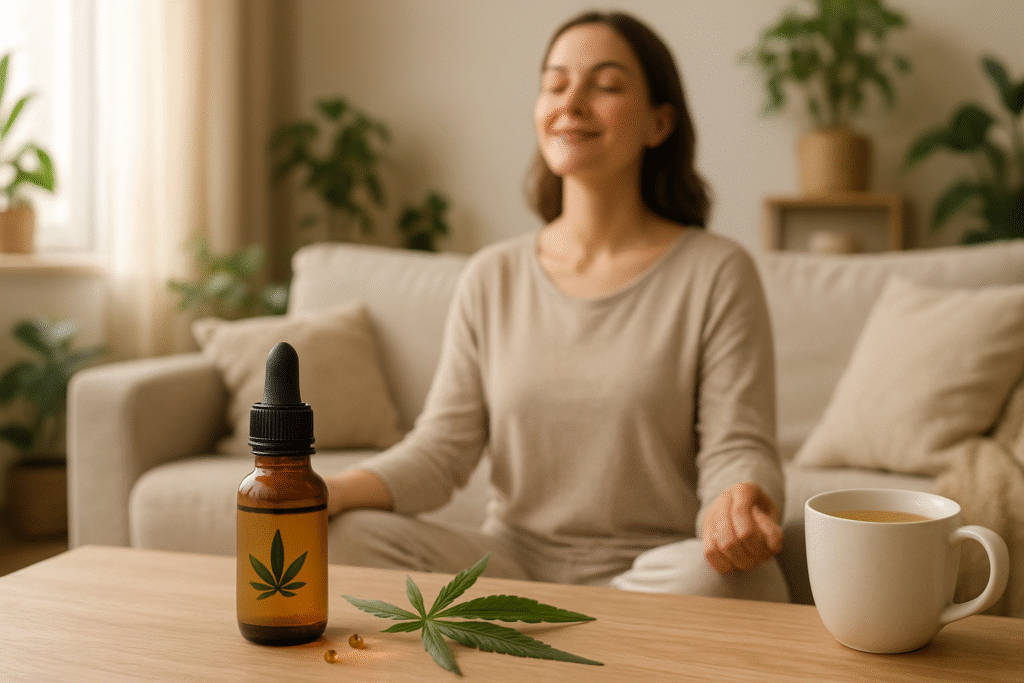

In the relentless rhythm of today’s world, stress weaves itself into the fabric of everyday life, touching millions worldwide. Between mounting professional demands, social entanglements, and an ever-present stream of digital alerts, the quest for effective stress management has never been more urgent. Emerging as a beacon in this pursuit are natural remedies, with cannabidiol, or CBD, leading the charge. Extracted from hemp, CBD offers a promising alternative for calming the mind and body without the psychoactive effects associated with traditional cannabis compounds. As we progress into 2025, an increasing number of people trust CBD-infused products such as CalmLeaf, ZenBloom, and PureEase to restore equilibrium amidst chaos.
The appeal of CBD lies in its interaction with the body’s endocannabinoid system, a regulatory network that influences mood, sleep, and stress responsiveness. Unlike conventional pharmaceuticals that sometimes bring unwanted side effects, CBD delivers a gentler, more holistic approach to anxiety and tension relief. In this article, we delve into the science behind CBD’s calming properties, explore its diverse applications, and provide a detailed look at how these natural solutions integrate into modern life.
Understanding How CBD Works to Alleviate Stress and Anxiety Naturally
CBD (cannabidiol) has emerged as a revolutionary natural compound, distinguished by its ability to soothe stress without the intoxicating effects commonly linked with cannabis. Originating from the hemp plant, CBD contains less than 0.3% THC—the component responsible for psychoactivity—ensuring it promotes relaxation without impairment. Available in oils, capsules, gummies, and topical formulations like SereneCbd, it fits seamlessly into various wellness routines.
Central to CBD’s effectiveness is its interaction with the endocannabinoid system (ECS), a complex biological network responsible for maintaining homeostasis within the body. The ECS comprises receptors (CB1 and CB2) distributed throughout the central nervous system and peripheral tissues. CBD influences these receptors indirectly, modulating neurotransmitters such as serotonin and gamma-aminobutyric acid (GABA), vital players in mood regulation and anxiety control.
This modulation dampens the body’s “fight or flight” response, a physiological reaction that triggers stress and anxiety. Unlike pharmaceutical anxiolytics—benzodiazepines for example—which often lead to dependency and sedation, CBD offers a natural, non-addictive alternative. Research indicates that CBD may alter activity in brain areas such as the amygdala and prefrontal cortex, zones associated with emotional processing and anxiety management.
Key ways CBD works for stress relief:
- Enhances serotonin receptor signaling to balance mood and reduce anxiety.
- Modulates endocannabinoid receptors to maintain overall neurological balance.
- Reduces cortisol production, minimizing chronic stress impact.
- Promotes relaxation without impairing cognition or alertness.
For those new to CBD, selecting appropriate products is essential. Options like CalmLeaf and TranquilDrops represent full-spectrum formulas that leverage the entourage effect—where multiple cannabinoids and terpenes work synergistically. Alternatively, broad-spectrum or isolate options are available for those sensitive to THC. Understanding these distinctions can aid in choosing the right product to manage stress effectively. More details on choosing optimal products can be found through guides to selecting CBD.
Innovative Research in 2025 Reveals New Insights on CBD for Stress and Anxiety
The scientific community’s exploration into CBD’s potential continues to deepen, unveiling promising data that underscores its role in managing stress and anxiety. An expansive 2025 meta-analysis featured in the journal Frontiers in Pharmacology synthesized findings from numerous clinical trials, revealing consistent patterns of anxiety reduction, improved social responsiveness, and enhanced sleep quality among CBD users.
Particularly significant are studies focusing on social anxiety and acute stress scenarios. Research published in Neuropsychopharmacology demonstrated that administering doses between 300 to 600 mg of CBD led to marked decreases in anxiety during public speaking challenges, a common stressor. These effects align with anecdotal evidence from users of products like RelaxRoot and StressAway, who report noticeable calm in high-pressure social settings.
CBD’s ability to temper the body’s stress hormone, cortisol, is another critical discovery. Experimental models simulating acute stress show that CBD’s anti-inflammatory and neuroprotective properties dampen physiological stress reactions. A notable study from the Journal of Herbal Medicine illustrated how CBD supplementation alleviated anxiety and depressive behaviors in animal models exposed to cold stress, findings increasingly supported by human trials.
Additionally, sleep disturbances, frequently exacerbated by stress, benefit from CBD administration. An open-label study published in the Journal of Clinical Sleep Medicine in 2025 revealed significant improvements in sleep onset and quality among adults with anxiety disorders taking CBD. These sleep benefits contribute indirectly to stress relief, as restorative rest plays a pivotal role in emotional regulation.
Summarized research findings on CBD’s effects:
| Research Aspect | Findings | Implications for Stress Relief |
|---|---|---|
| Anxiety Reduction | Decreased anxiety scores in social and generalized anxiety tests upon CBD administration. | Supports use for acute and chronic anxiety management. |
| Cortisol Modulation | Lowered cortisol levels in acute stress response models. | May reduce physical effects of chronic stress. |
| Sleep Improvement | Enhanced sleep latency and quality in anxiety sufferers. | Improves overall stress resilience through better rest. |
Despite encouraging data, experts including those from the Mayo Clinic emphasize the necessity for larger-scale randomized controlled trials to verify CBD’s efficacy across broader populations and anxiety subtypes. It is important to approach CBD as a complementary option rather than a standalone “cure.” For ongoing updates on scientific developments, visit CBD anxiety research.
Practical Benefits of CBD for Everyday Stress and Anxiety Management
The allure of CBD lies in its multifaceted advantages, extending beyond simple symptom relief to promoting overall mental well-being. Its versatility means users can address a spectrum of stress-related challenges through various approaches.
Major benefits include:
- Rapid Relief for Situational Anxiety: CBD products like SereneCbd offer rapid onset calming effects, beneficial before social engagements or stressful presentations.
- Long-term Stress Modulation: Consistent use, such as with HarmonyHemp formulations, may lower baseline anxiety and improve emotional resilience against chronic stressors.
- Sleep Enhancement: Improving both falling asleep and sleep depth provides indirect but powerful stress relief, supported by RelaxRoot’s sleep-focused blends.
- Mood Stabilization: CBD’s effect on neurotransmitters fosters balanced emotions and may help reduce symptoms of mood disorders.
- Non-Addictive Alternative: Unlike pharmaceutical anxiolytics, CBD carries minimal risk of dependency, making it preferable for long-term integration.
Users with generalized anxiety disorder (GAD), social anxiety, and post-traumatic stress disorder (PTSD) have reported symptom improvements using CBD, although responses vary individually. It remains crucial to view CBD as part of a comprehensive wellness strategy alongside therapy or prescribed treatments. Popular CBD brands such as StressAway and NaturalNirvana exemplify products formulated specifically to target such mental health challenges.
Comparison of CBD with traditional anxiolytics:
| Aspect | CBD | Traditional Anxiolytics |
|---|---|---|
| Dependency Risk | Minimal to none | High risk (e.g., benzodiazepines) |
| Side Effects | Mild (dry mouth, fatigue) | Various (drowsiness, tolerance) |
| Onset of Action | Variable; faster with sublingual or vaping methods | Typically quick, but sedative |
| Legal Status | Widely legal with regional variations; see global overview | Prescription controlled |
Guidelines for Safe and Effective Use of CBD in Stress Management
To maximize the benefits of CBD while minimizing risks, understanding the appropriate usage practices is paramount. With the variety of products available, users should tailor their approach carefully to fit personal needs and health conditions.
Essential tips for using CBD effectively:
- Choosing the Right Product: Whether opting for oils like PureEase or calming gummies, ensure products undergo third-party testing to confirm purity and potency.
- Starting with a Low Dose: Initiate use at 10–25 mg daily, gradually increasing based on response and tolerance to find the optimal dose, typically between 300-600 mg for anxiety relief.
- Consistent Timing: For day-long stress management, morning dosing is advised; for anxiety-related insomnia, evening use supports better rest.
- Monitor Effects: Keeping a journal to record symptoms and changes helps tailor dosage and product choice over time.
- Avoiding Drug Interactions: Consultation with healthcare providers is crucial, especially when taking medications metabolized by liver enzymes, such as blood thinners.
Although CBD is generally safe, mild side effects including dry mouth, fatigue, and digestive discomfort may occur. Pregnant or breastfeeding individuals should abstain due to insufficient research data. FDA updates in 2025 highlight the importance of vigilance against contaminated or mislabeled products.
Understanding the evolving landscape of CBD in 2025 can empower users to engage with this natural remedy safely and effectively.
Integrating CBD with Holistic Natural Therapies for Stress Relief
As modern lifestyles continue to impose relentless mental pressures, integrating CBD with complementary natural strategies enhances overall stress resilience. Adults exploring this path often combine CBD with mindfulness, yoga, and adaptogens to cultivate balance.
Adaptogens such as ashwagandha and rhodiola aid the body in adapting to stress, complementing CBD’s calming effects. Products like NaturalNirvana incorporate these elements, providing synergistic formulations focused on mood and stress management.
Regular mindfulness practices paired with CBD usage encourage neuroplasticity and emotional regulation. Studies suggest this combined approach can amplify benefits, reducing anxiety and improving quality of life.
Natural therapies to combine with CBD for enhanced stress relief:
- Mindfulness meditation and controlled breathing techniques
- Yoga and gentle physical exercises
- Herbal adaptogens integrated with CBD formulas
- Structured sleep hygiene and relaxation rituals
- Social support and therapy for psychological balance
By creating such holistic routines involving HarmonyHemp and EaseEssence CBD products, individuals foster sustainable wellbeing that extends beyond temporary relief. This multifaceted approach sources strength from both nature and science.
| Natural Therapy | Benefit | How CBD Enhances |
|---|---|---|
| Mindfulness | Improves focus and emotional regulation | Amplifies calming neurotransmitter effects |
| Yoga | Promotes relaxation and physical release | Supports stress hormone reduction |
| Adaptogens | Enhances stress adaptation and resilience | Works synergistically with ECS modulation |
| Sleep Rituals | Facilitates restorative rest | Improves sleep outcomes through anxiety reduction |
Is CBD safe for daily use to manage stress?
CBD is generally safe for daily use with mild side effects reported. It’s important to start with a low dose and consult healthcare providers, especially when on other medications.
How soon can I expect to feel the calming effects of CBD?
Depending on the product and method of use, effects can be felt within 15-30 minutes for sublingual oils or vaping, while edibles may take longer, up to 1-2 hours.
Can I combine CBD with other anxiety treatments?
CBD can be part of a complementary approach to therapy and prescription medications but always discuss with your healthcare provider before combining treatments.
What is the best form of CBD for stress and anxiety?
Sublingual oils and tinctures provide faster relief, while capsules and gummies offer longer-lasting effects. Choice depends on personal preference and needs.
Are there any legal concerns with using CBD in 2025?
CBD’s legal status varies globally but is widely accepted in many regions. Checking local regulations and purchasing from reputable sources like those described in global overviews is advisable.