
The booming CBD market continues to captivate health enthusiasts, wellness advocates, and everyday consumers seeking the potential benefits of cannabidiol. However, with the marketplace saturated by a vast array of products and brands, discerning quality becomes increasingly critical. Third-party testing emerges as a vital mechanism to guarantee safety, consistency, and authenticity in CBD offerings. This impartial process, conducted by independent laboratories, scrutinizes the composition and purity of products, empowering consumers with transparent information crucial for confident choices. In a landscape where regulation is still evolving, third-party testing bridges the gap between industry promises and consumer protection, fostering trust and elevating standards across the sector.
As the demand for reliable CBD products intensifies, understanding the intricacies and significance of third-party testing helps unravel the complexities of product verification. It ensures that a given CBD product’s cannabinoid content matches what’s declared and confirms the absence of harmful contaminants such as pesticides, heavy metals, and solvents. Moreover, for brands, embracing transparent third-party analysis signifies a commitment to quality that distinguishes them from competitors and solidifies consumer loyalty. As 2025 unfolds with new regulatory shifts and scientific insights, the role of independent lab testing remains fundamental to nurturing a trustworthy and safe CBD market.
The Critical Role of Third-Party Testing in Ensuring CBD Product Quality and Safety
Third-party testing holds the key to verifying the quality and safety of CBD products in an industry that is still largely self-regulated. By engaging independent labs such as SafeLeaf Testing and TrustedLabs, brands can provide an unbiased evaluation of their products. This process includes rigorous analysis to verify the accuracy of cannabinoid levels, ensuring that the label claims match the product contents. For instance, a 2022 study revealed that nearly half of sampled CBD products deviated by more than 10% from their labeled CBD content, underscoring the risk consumers face without impartial testing.
Ensuring purity extends beyond cannabinoid content verification. Third-party labs meticulously test for contaminants like heavy metals—lead, cadmium, arsenic, and mercury—which hemp plants can bioaccumulate from soil, posing health hazards to consumers. Pesticide residues, residual solvents from extraction methods, and microbiological contaminants such as molds and bacteria are other common safety concerns addressed by these comprehensive tests. These thorough purity checks distinguish trustworthy products, offering peace of mind concerning health impacts.
Additionally, by providing Certificate of Analysis (COA) documents, labs like CBDVerify and CertiCann allow consumers and retailers alike to evaluate the specific cannabinoid and terpene profiles, offering greater insight into the product’s efficacy and experience. This transparency is invaluable, helping savvy buyers differentiate between broad-spectrum, full-spectrum, or isolate CBD formulations based on real data rather than marketing hype.
| Test Type | Purpose | Common Contaminants Tested | Examples of Labs |
|---|---|---|---|
| Potency (Cannabinoid Profile) | Determines concentration of CBD, THC, CBG, and other cannabinoids | N/A | TrustedLabs, ClearCertify |
| Heavy Metals | Detects toxic metals that can accumulate in hemp | Lead, Arsenic, Cadmium, Mercury | PureAssure, ThirdEye Labs |
| Pesticides | Checks for toxic pesticide residues from cultivation | Common agricultural pesticides | SafeLeaf Testing, HonestTest |
| Residual Solvents | Identifies leftover solvents from extraction | Ethanol, Butane, Propane | PureTestCBD, CertiCann |
| Microbiological Contaminants | Tests for harmful bacteria, mold, and fungi | Salmonella, Aspergillus | ClearCertify, ThirdEye Labs |
- Third-party testing guarantees product consistency and consumer safety.
- Independent labs provide unbiased Certificates of Analysis (COAs).
- Tests cover potency, contaminants, and microbiological agents.
- Transparent lab results enhance brand integrity and consumer confidence.
- Purchasing only third-party tested products mitigates health risks.

How Third-Party Testing Builds Consumer Trust and Strengthens Brand Reputation
With a crowded CBD marketplace, pairing safety with trust is essential for any company aiming to thrive in 2025 and beyond. Consumers increasingly seek brands that demonstrate transparency by openly sharing third-party lab results. Notably, companies that post Certificates of Analysis from respected labs such as TrueGrade and PureTestCBD distinguish themselves from competitors who neglect this step.
Sharing detailed lab reports empowers consumers to verify for themselves that the CBD, THC, and minor cannabinoid content align with product claims. Transparency also includes reporting on the levels of terpenes – natural aromatic compounds that contribute to the entourage effect, enhancing the product’s overall benefits. Studies suggest that products featuring higher minor cannabinoid and terpene concentrations often deliver more pronounced effects, which appeals to educated consumers searching for premium offerings.
The benefits of third-party testing extend beyond customer relations: it strengthens internal quality control measures. Brands that work closely with independent labs can quickly identify production inconsistencies or contamination risks early, reducing expensive recalls or reputational damage. Furthermore, independent verification may prepare companies for growing regulatory scrutiny by authorities informed through global perspectives such as CBD legal global overview frameworks.
- Transparency in lab testing fosters consumer confidence and brand loyalty.
- Published Certificates of Analysis contribute to perceived product legitimacy.
- Insight into terpenes and minor cannabinoids differentiates product quality.
- Third-party testing assists companies in ensuring consistent manufacturing.
- Independent testing can help meet current and upcoming regulations.
| Brand Practice | Benefit for Consumers | Benefit for Brands |
|---|---|---|
| Providing public COAs | Increases trust and informed purchasing decisions | Enhances brand reputation and competitive edge |
| Regular product batch testing | Ensures consistent product quality | Reduces risk of recalls or legal issues |
| Transparency about cannabinoid profiles | Educates consumers on product effects | Aligns products properly with consumer needs |
Decoding the Third-Party Testing Process: From Sampling to Certificate of Analysis
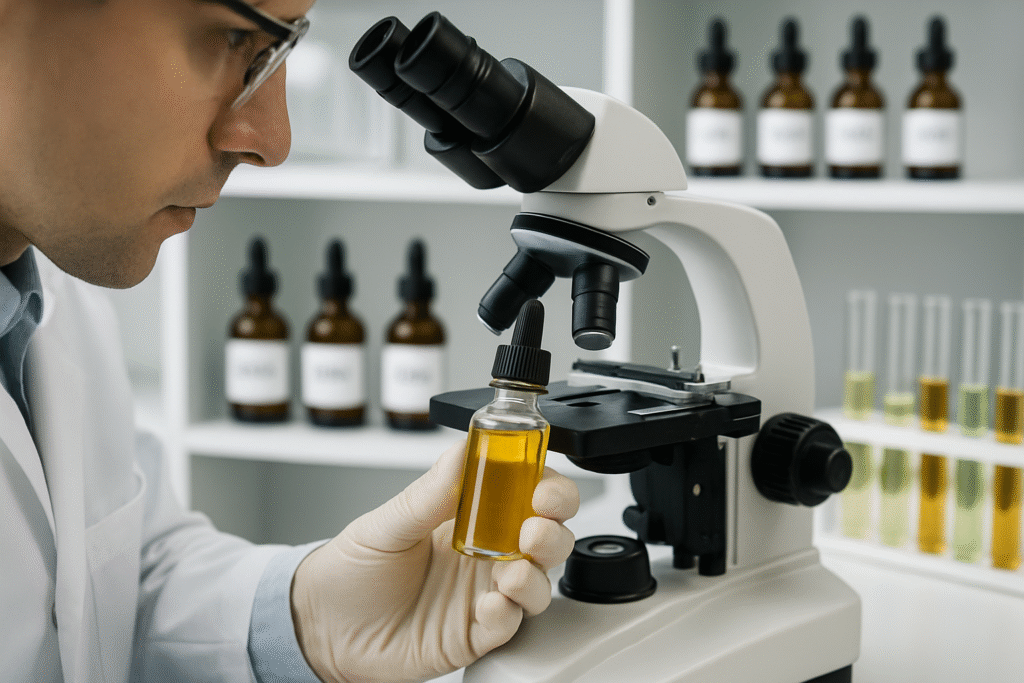
The pathway from raw CBD product to independent verification involves several critical steps to ensure reliable results. When a company submits samples to a lab such as CertiCann or ClearCertify, the process typically includes sample preparation, testing, data analysis, and COA generation.
Advanced techniques like High-Performance Liquid Chromatography (HPLC) and Gas Chromatography (GC) are standard methods for quantifying cannabinoids and terpenes. Mass spectrometry complements these, specifically aiding in detecting residual solvents and heavy metals. Microbiological testing employs Polymerase Chain Reaction (PCR) to identify pathogenic contaminants swiftly.
Once analyses conclude, the laboratory compiles findings into a Certificate of Analysis (COA) that summarizes cannabinoid percentages, terpene content, and contaminant screening outcomes. A sample COA might display CBD potency per milliliter, THC levels (ensuring they remain below legal thresholds such as 0.3%), and confirmation that the product is free from dangerous substances. This document serves as a tangible proof of quality and safety for consumers and regulatory bodies alike.
| Testing Stage | Purpose | Methods Used | Outcome/Document |
|---|---|---|---|
| Sample Receipt & Preparation | Ensure sample integrity and readiness for testing | Controlled storage and handling | Prepared product samples |
| Cannabinoid & Terpene Profiling | Measure concentrations of cannabinoids and terpenes | HPLC, GC | Quantitative data for COA |
| Purity & Contaminant Testing | Identify heavy metals, pesticides, solvents, microbes | Mass spectrometry, PCR | Contaminant screening report |
| Certificate of Analysis Issuance | Summary of test results for transparency | Documentation and digital formatting | COA document shared publicly |
- Lab use standardized scientific methods for accuracy and reliability.
- Certificates of Analysis provide essential transparency for consumers.
- Advanced technology detects potency and potential contaminants.
- Testing includes cannabinoid content, terpenes, heavy metals, pesticides, and microbes.
- COAs are key tools for regulatory compliance and consumer trust.
Navigating Legal and Regulatory Importance of Third-Party Testing in CBD Industry
As CBD regulation evolves worldwide, third-party testing becomes a critical tool for compliance, especially for companies operating in multiple jurisdictions. Independent lab reports help verify that products meet legal criteria such as THC limits, which in many regions must not exceed 0.3% by dry weight. This compliance protects both consumers and companies from potential legal challenges.
Brands utilizing thorough third-party testing are better equipped to address regulatory requirements, avoiding fines or product recalls. For consumers seeking clarity in complex legal environments, resources like understanding the legal complexities surrounding CBD provide valuable guidance on navigating these ever-changing rules.
Besides legal protection, adhering to third-party testing also helps prevent issues related to product mislabeling. Alarmingly, studies have found widespread inaccuracies in cannabinoid content among untested products, sometimes coupled with the presence of harmful substances. Transparent lab testing shields consumers from these risks and weeds out unreliable manufacturers from the market.
| Legal Concern | Testing Role | Consumer Benefit | Brand Benefit |
|---|---|---|---|
| THC Compliance | Verify THC levels below legal thresholds | Ensure legal and safe consumption | Prevent regulatory actions and recalls |
| Product Label Accuracy | Confirm cannabinoid content matches label | Avoid misleading claims | Maintain market credibility |
| Contaminant Safety | Detect heavy metals, pesticides, microbes | Protect consumer health | Reduce liability and enhance compliance |
- Third-party testing aids in meeting diverse legal regulations.
- Testing prevents inaccurate product labeling, reducing legal risks.
- Consumers are reassured on product safety and efficacy.
- Brands strengthen legitimacy and avoid costly repercussions.
- International guidance supports companies expanding legally.
Educating Consumers on Choosing Only Third-Party Tested CBD Products
Educating consumers about the importance of third-party testing is paramount for fostering safe and effective use of CBD. An informed shopper understands that product labels alone are not always reliable due to the lack of stringent regulatory oversight. Consequently, the Certificate of Analysis is an indispensable document that consumers should review before purchase.
Key aspects consumers should verify include:
- The date of the testing report to ensure current data.
- The total cannabinoid content and presence of THC within legal limits.
- Passing results for contaminant screenings including heavy metals and pesticides.
- The name and accreditation of the third-party lab conducting the tests (e.g., PureAssure or HonestTest).
Consumers can confidently select products from brands that prioritize transparency and make their testing results accessible. This due diligence not only encourages safer health outcomes but also incentivizes brands to continue rigorous testing efforts. One such example is the preference for full-spectrum CBD products with proven terpene diversity, which many users find offer enhanced therapeutic benefits through the entourage effect.
| Consumer Checklist | Reason |
|---|---|
| Review COA publication date | Ensures testing is recent and relevant |
| Check cannabinoid potency and THC levels | Confirms label accuracy and legal compliance |
| Verify contaminant results | Protects from potentially harmful substances |
| Confirm lab credentials and accreditation | Ensures trustworthy testing methods |
| Look for terpene profiles (especially in full-spectrum products) | Indicates product quality and potential effects |
By following these guidelines, consumers participate actively in the creation of a safer and more reliable CBD industry. This knowledge empowers buyers to make informed decisions aligned with their wellness goals. For deeper insight, exploring articles such as recent advancements in CBD research and their implications helps contextualize the broader impact of quality assurance on health outcomes.
Why is third-party testing vital for CBD products?
Third-party testing provides unbiased verification of cannabinoid content and ensures products are free from harmful contaminants, ensuring safety and label accuracy.
How can consumers verify if a CBD product has been third-party tested?
Consumers can check for Certificates of Analysis (COAs) on company websites or product packaging, which detail lab results from independent accredited labs.
What contaminants are commonly tested in third-party CBD lab reports?
Labs frequently test for heavy metals like lead, pesticides, residual solvents, and microbiological contaminants such as molds and bacteria.
Does third-party testing guarantee product effectiveness?
While third-party testing confirms purity and potency, product effectiveness can also depend on individual responses and specific cannabinoid or terpene profiles.
Are all third-party labs equally reliable?
Not all labs maintain the same standards; consumers should look for tests conducted by reputable labs with clear accreditations such as TrustedLabs or ClearCertify.